
Fresh from Wellspring Charitable Gardens - June 18, 2026
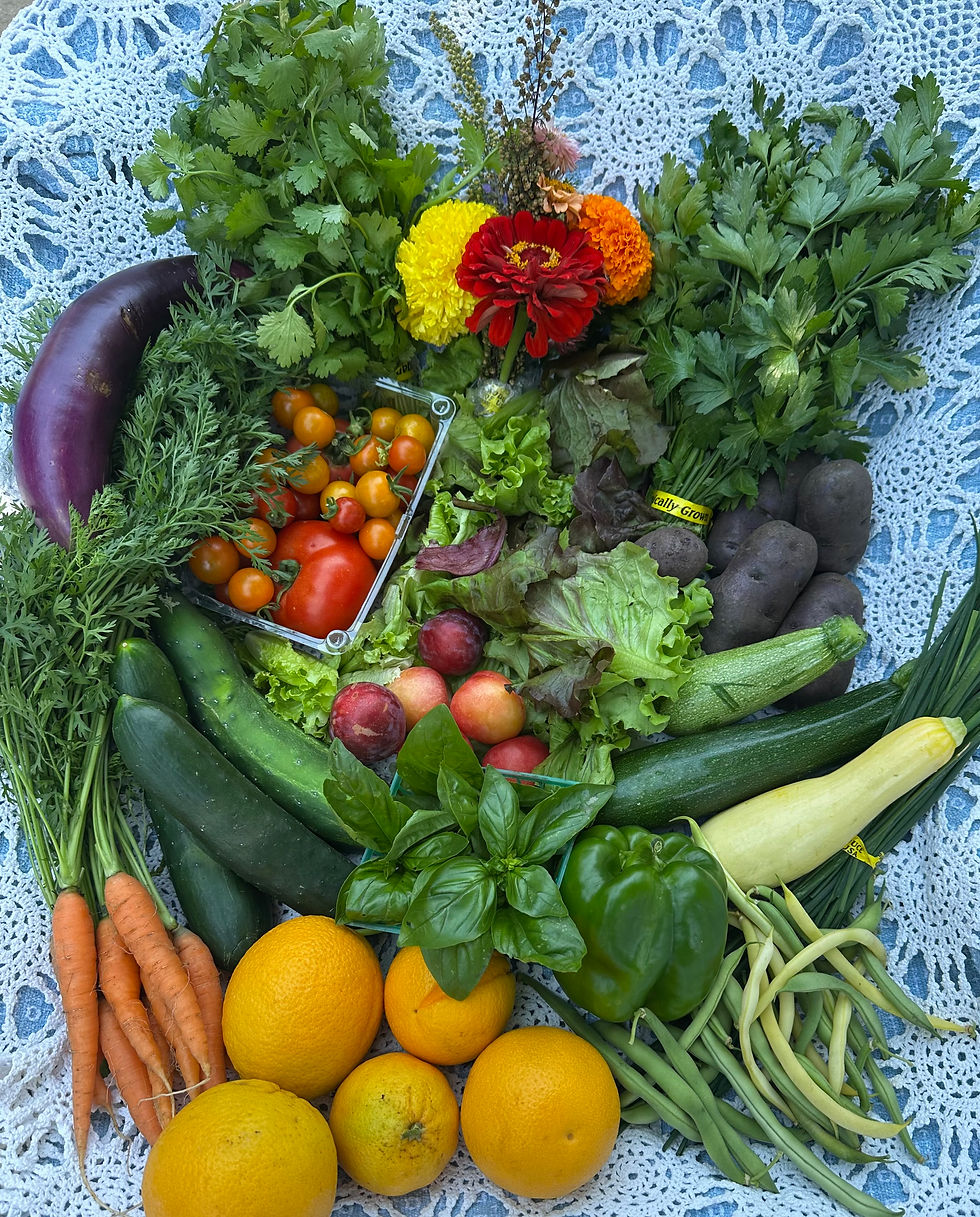
Fresh Today… Bell Peppers, Tomatoes, Cucumbers, Green Beans, Carrots, Summer Squash, Lettuce, Potatoes, Cilantro, Chives, Basil, Parsley, Valencia Oranges, Plums & Flowers
Using your Produce… by Julie Moreno
This week our first peppers and tomatoes appear in the baskets. Tomatoes should be stored on the counter until they are fully ripe. Use them or freeze the raw tomatoes to make sauce later. This week we should just have a few, so I included a recipe to make bruschetta. My main recipe uses the combination of cilantro and basil for a taste of Thai flavors. You could add in protein, like chicken, shrimp or tofu to make this a meal.
Thai Cucumber Carrot Salad
2 limes (about ½ tsp zest and 2 Tbsps. juice)
1 tsp sugar or honey
¼ tsp red pepper flakes
2 garlic cloves, minced
½ tsp salt
½ tsp pepper
¼ cup oil
1 head lettuce, chopped 4-5 cups
2 cucumbers, chopped
2 carrots, shredded
2-3 radishes, shredded
3 green onions, sliced
1 medium avocado, peeled and cubed
½ cup loosely packed cilantro leaves, chopped
¼ cup loosely packed basil leaves, chopped
½ cup chopped peanuts (optional)
* Finely grate zest from limes. Cut limes crosswise in half; squeeze juice. Place zest and juice in a large bowl and add sugar, red pepper flakes, garlic, salt and pepper, mix well then add the oil and combine. Add to the dressing lettuce, cucumber, carrots, radishes, green onions and mix well. Add the avocado, cilantro and basil, stir gently to combine. Top with peanuts, if using. Eat right away.

WCM & WCG Thank Phi Gamma Chapter
Omega Nu - 𝝮N
A few months ago, Wellspring Charitable Gardens (WCG) was invited to apply for a grant to help us serve the counseling needs of children and families in our community. Over the years, many of our clinicians have been trained in Trust Based Relational Intervention (TBRI) which provides parenting training and support to families who have foster care children or adopted children in their homes. WCG is collaborating with these families, clinicians, community volunteers, and agencies to bring a TBRI camp to our small local farm. We need a space to engage the families in educational and therapeutic outdoor activities. An authentic, life-sized Tipi offered a fun and educational classroom setting, but the cost was significant. We are so thrilled to announce that Omega Nu has chosen to fund $4,000 of the $5,000 for a traditional high quality, weather resistant, 26’ Pole TiPi that seats 25. We would welcome your donation to help us complete the amount needed for purchase and installation. We are now getting estimates for an appropriate footing and a qualified construction crew to build it. Omega Nu, thank you for all that you do to make the dreams of organizations like ours come true. Gratefully, WCM & WCG Team!

WCG Goes Native
to offer a Trust Based Relational Intervention (TBRI)
Day Camp for foster care and adoptive families.
Training is based upon Attachment Theory
and therapeutic activities that build trust
and parenting competence.
Simple Tomatoes…
Tomatoes are ripe and can be picked before their color fully develops. Keep them on the counter for a few days while they ripen completely. Serving the tomatoes on toasted baguette slices, makes the perfect appetizer or side dish for lunch or dinner.
Tomato-Basil Bruschetta
1 baguette, sliced into ¼ inch rounds
2-3 Tbsps. olive oil
3-4 large tomatoes, diced small
1 clove garlic, minced
3-4 Tbsps. basil, sliced
1 tsp wine or balsamic vinegar
½ tsp salt
½ tsp fresh ground black pepper
* Preheat the broiler to high. Drizzle the olive oil onto the baguette slices. Toast the baguette under the broiler, until very lightly colored, flipping once to brown each side. Remove from the oven and set aside. Combine the remaining ingredients and top each toasted baguette slice with a spoonful of the tomato-basil mixture.

Metaphors of Soil and Soul…
Bug Life
Ronda May Melendez & Keith F Martin
The heat signals the close of the cruciferous vegetable season. The remaining broccoli, cauliflower, cabbage, kale, and arugula are now flowering and attracting insects. Yes, BUGS! Memory reflexively recalls first the bad bugs, harmful pests, like aphids and mites, that infest a plant’s leaves and despoil the solar arrays that transform sunlight into energy, food, and life. Only as afterthought we recall the good bugs – pollinators (bees) or predators (praying mantis) that snack on bad bugs. Beneficial bugs help propagate plants or patrol the garden’s grounds. So, not all bugs are created equal, or a bug is a bug, but not necessarily a bug! Some promote health, others devour it. Some are welcome, others malicious, so correctly recognizing good and bad bugs and knowing what makes them thrive are vital to the health and harvest of the garden.
Flowering purple broccoli and fragrant cilantro draw good bugs, such as lacewings, which prey on aphids and mites that leave behind toxic waste (“bug-do”) that dries out and curls plant leaves. The lacewing’s snacking habits are a beautiful thing, and we are grateful for them. There are, however, nasty bugs that gardeners attract through their own harmful agrarian practices. Not long ago I was harvesting cucumbers while at the same time removing damaged leaves from the plants. I first gathered the desirable crop and then stripped away any undesirable leaves and cast them to the ground between the rows. Master gardener Heidi quietly observed my pride in multitasking – picking and plucking concurrently - and then casually mentioned that the discarded leaves would draw destructive interlopers to our crops. My thoughtless “efficiency” was leaving slugs and snails a tasty trail through barren furrows to the next ridge hosting a delicious buffet! Though chagrined at my ignorance, I am still grateful for her lesson.
Unwelcome thoughts have been crawling through my mind all week. How often do I recall something that “bugs” me and reflexively deem it “bad” instead of becoming curious about its nature and the circumstances that draws it to my attention? Are my “bugs” pollinators, predators, or polluters? How might I discern their influence and encourage the “bugs” that benefit my mental, emotional, and relational landscapes and restrain those that ravage them? Recognition and understanding – identifying and getting to know our “bugs” – support our well-being and ensure our thriving.
For though by this time you ought to be teachers, you have need again for someone to teach you the elementary principles of the oracles of God, and you have come to need milk and not solid food. For everyone who partakes only of milk is not accustomed to the word of righteousness, for he is an infant. But solid food is for the mature who because of practice have their senses trained to discern good and evil.” Hebrews 5:14


Comments